5 min read
Bitcoin is trading above $70,000 as investors weigh developments in the Middle East alongside the latest US inflation data.
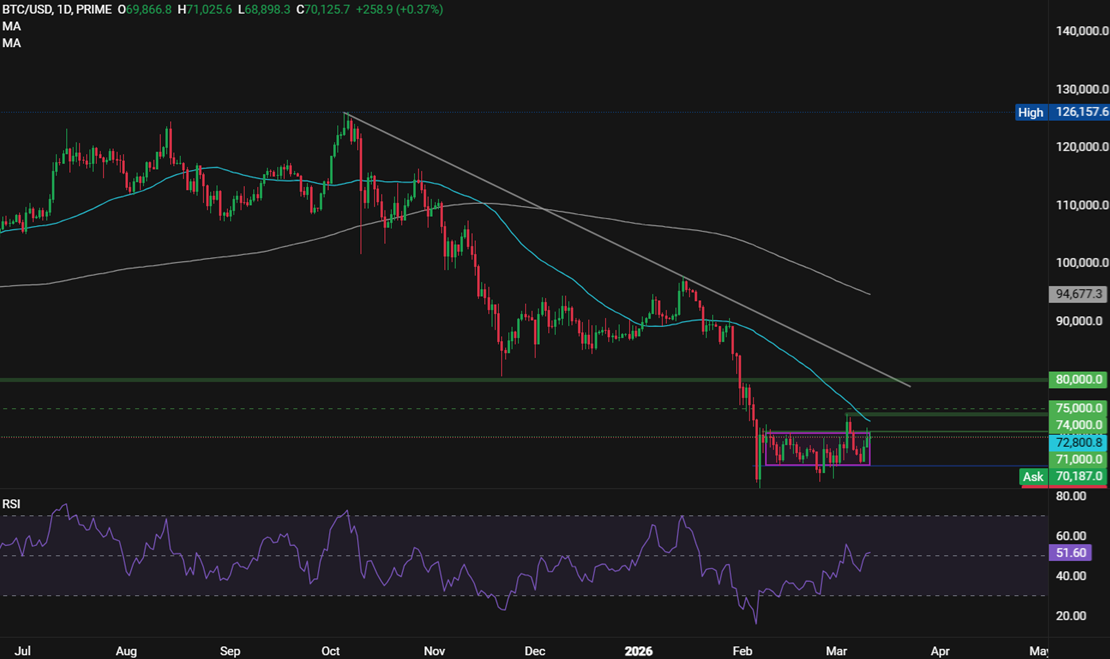
The largest cryptocurrency is hovering near the upper end of the $65K–$71K range it has traded within since early February. BTC is up more than 3% this week, showing resilience despite ongoing concerns about the conflict in Iran, volatile oil prices and rising inflation risks.
Oil markets have been particularly turbulent. Prices briefly surged to around $120 per barrel earlier this week — the highest level in nearly four years — before falling sharply to around $76 on Tuesday. Crude has since stabilised near $85 on Wednesday. Even after the pullback, oil remains roughly 25% higher this month, fuelling concerns about renewed inflation pressures.
The volatility follows comments from President Trump suggesting the war with Iran could end soon, alongside the International Energy Agency’s announcement that it would release up to 400 million barrels from strategic reserves. However, the Strait of Hormuz — a key global energy shipping route — remains effectively closed, keeping supply risks elevated.
Treasury yields have begun rising again as markets monitor oil prices and assess the inflation outlook.
US CPI brings no surprises
US CPI data showed inflation running at 2.4% year-on-year in February, in line with expectations and unchanged from January. Core inflation, which excludes food and energy, also held steady at 2.5% annually, while the monthly reading slowed slightly to 0.2%.
While the data offered little surprise, it likely reflects conditions before the recent surge in energy prices. If higher oil prices persist, inflation could rise again in the coming months.
Markets currently assign a 99% probability that the Federal Reserve will leave interest rates unchanged at its March 18 meeting. Expectations for the first rate cut have been pushed back to September from June as energy-driven inflation risks increase.
Higher rates for longer typically weigh on liquidity-sensitive assets such as Bitcoin. However, BTC has so far remained resilient, trading above $70K even as yields move higher.
US equities opened mixed following the inflation report, with the tech-heavy Nasdaq gaining while the Dow Jones edged lower.
What next?
For risk sentiment to improve more decisively, markets will likely need clearer signs of de-escalation in the Middle East, a further fall in oil prices, and the reopening of the Strait of Hormuz.
Still, institutional demand is starting to show encouraging signs, which, if sustained, could help to support BTC prices higher.
According to SoSoValue data, spot BTC ETFs recorded inflows of $250.92 million on Tuesday, bringing total inflows to $167.03 million. Should BTC ETF inflows continue and intensify? BTC could see further upside in the coming days.
Trading involves risk.
Author

 Risk Disclaimer
The content provided here is for informational purposes only. It is not intended as personal investment advice and does not constitute a solicitation or invitation to engage in any financial transactions, investments, or related activities. Past performance is not a reliable indicator of future results.
The financial products offered by the Company are complex and come with a high risk of losing money rapidly due to leverage. These products may not be suitable for all investors. Before engaging, you should consider whether you understand how these leveraged products work and whether you can afford the high risk of losing your money.
The Company does not accept clients from the Restricted Jurisdictions as indicated in our website/ T&C. Some services or products may not be available in your jurisdiction.
The applicable legal entity and its respective products and services depend on the client’s country of residence and the entity with which the client has established a contractual relationship during registration.