7 min read
 Today at 12:30 pm (UTC), the US Bureau of Labor Statistics (BLS) publishes the September jobs report. It’s the first Nonfarm Payrolls (NFP) release since the Federal Reserve (Fed) raised interest rates, and it’s the first real test of whether the jobs market supports that decision. The key question is whether August’s jump in hiring was the start of a recovery or a one-month blip.
The answer could shape expectations for the Fed’s next meeting on 27 to 28 October. Markets have already scaled back their bets this week. After softer than expected inflation data, CME FedWatch now prices roughly a one in four chance of another hike there, down from close to 70% a week ago.
Where we are
August surprised almost everyone:
- 162,000 jobs added, roughly three times what forecasters expected and the strongest month since March
- June and July revised up by 55,000 combined, with July turned from a 23,000 loss into a 21,000 gain
- Unemployment held at 4.1%, while participation rose to 61.6% from 61.4%
- Wage growth slowed to 3.1% year on year, the lowest since May 2021
Twelve days later, the Fed delivered its first rate hike since 2023, lifting the target range to 3.75% to 4%.
For today, economists expect around 90,000 jobs, with unemployment staying at 4.1%. Wage growth is forecast at 3.1% year on year.
Why some economists doubt August
A big part of August’s strength came from one place. Local government education jobs fell 58,000 in July, then rose 42,000 in August. School hiring is notoriously hard to adjust for seasonality, and many analysts think generous seasonal adjustments flattered August, so September could see a correction.
The private data also told a different story at the time. ADP put August hiring at just 38,000.
The picture has firmed since then, though. ADP’s September reading showed 90,000 private jobs, well above the 68,000 expected, and jobless claims fell between the two survey periods.
The bigger lesson is that payrolls have been erratic all year. The economy lost 156,000 jobs in February, then added 214,000 the following month. One report rarely settles a trend.
How to read the report
The headline is one of five numbers, and they don’t always agree.
- Payrolls. How many jobs were added or lost. It’s the headline, but also the most volatile figure.
- Unemployment rate. It comes from a separate household survey, and it can fall for the wrong reasons. In July it dropped because people left the workforce, not because they found jobs.
- Average hourly earnings. The closest link to inflation. With the Fed hiking because of inflation, a hot wage figure may matter more than a hot headline.
- Participation rate. It tells you whether a move in unemployment reflects real hiring.
- Revisions. August itself gets revised today. A 90,000 headline with August cut sharply reads very differently from 90,000 with August confirmed.
How one number travels across markets
The chain usually runs like this:
NFP → Fed expectations → Treasury yields → US dollar → gold and Bitcoin
The two-year Treasury yield tends to react first, as it tracks where markets think Fed rates are heading. Higher yields can make the dollar more attractive and raise the cost of holding assets that pay no yield, such as gold and Bitcoin (BTC).
The chain doesn’t always hold. Gold has its own drivers, including central bank demand and geopolitical risk, and Bitcoin can be dominated by flows and positioning on any given day.
Three ways today could go
Stronger than expected. A print well above 90,000, lower unemployment or firm wages could revive October hike odds after this week’s sharp drop. The two-year yield and the dollar may rise, which could put pressure on gold and Bitcoin. An especially strong print could also push longer-dated yields up more than short ones, as markets price a stronger growth outlook.
Close to consensus. Then the details decide it, especially the August revision and wages. With hike odds already falling sharply this week, a consensus print may not trigger much of a reaction. Positioning matters here as much as the data.
Weaker than expected. Soft hiring, rising unemployment or cooling wages could pull hike odds even lower. Yields and the dollar may fall, which on its own could support gold and Bitcoin.
There’s a limit to that logic, though. A very weak report, especially with August revised down, could shift the focus from “fewer hikes” to “is the economy slowing?” That tends to weigh on risk assets, Bitcoin included. Gold may hold up better in that case, given its defensive role.
Markets to watch
The dollar and the two-year yield will likely set the tone in the first minutes after the release. For most traders, though, the moves that matter are in gold and Bitcoin.
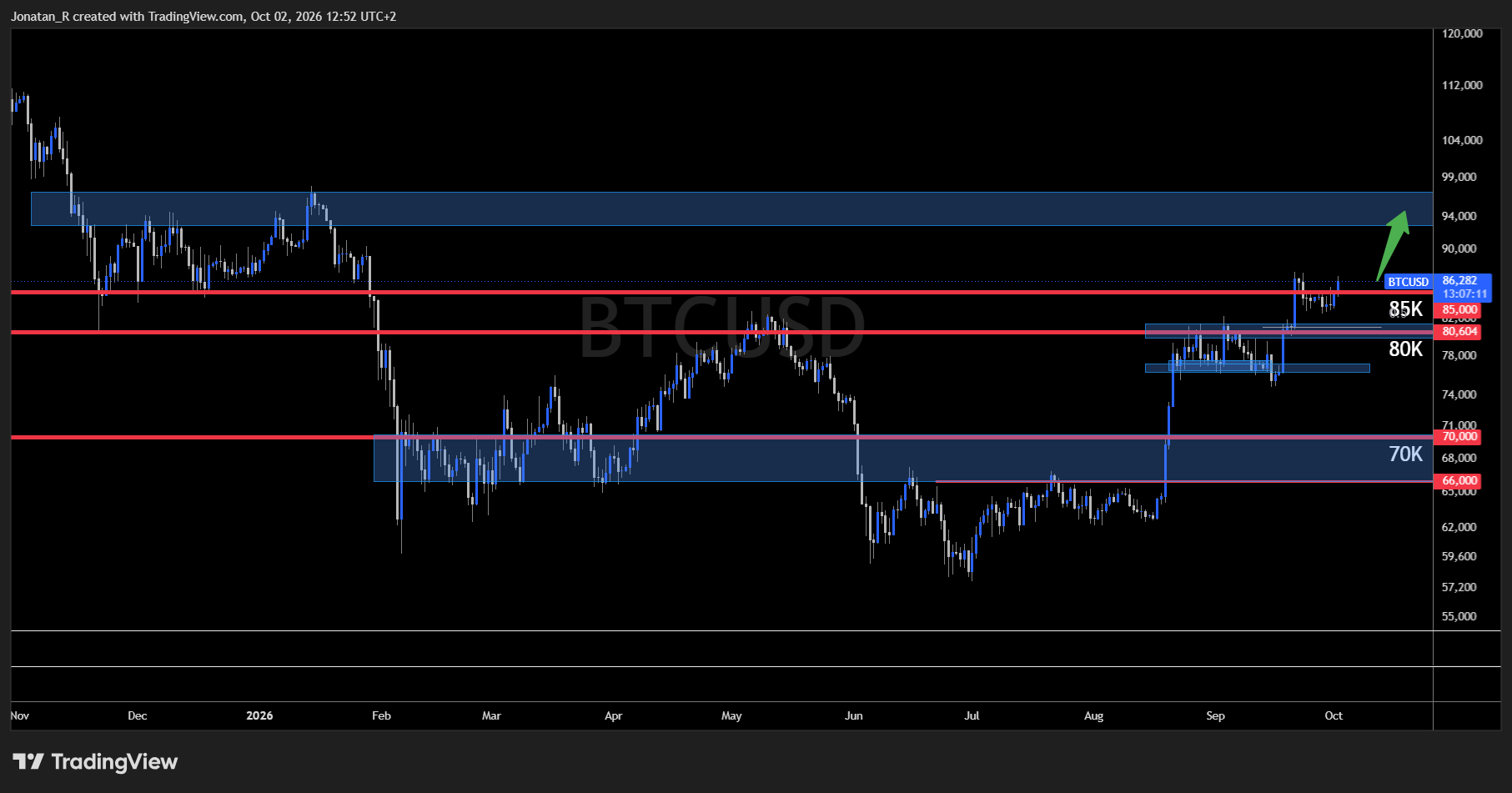
Bitcoin recently broke above $85,000 and is now pushing into resistance around $87,000, trading near $86,300 at the time of writing.
If the report eases expectations for another Fed hike, it could act as a bullish catalyst. A clean break above $87,000 could potentially open the way towards $90,000, and possibly the $95,000 area, where the price was last rejected in January.
If instead a strong report pushes yields and the dollar higher, the focus may shift back to $85,000 as the first support to hold. Below that, the $80,000 area is the next key level.
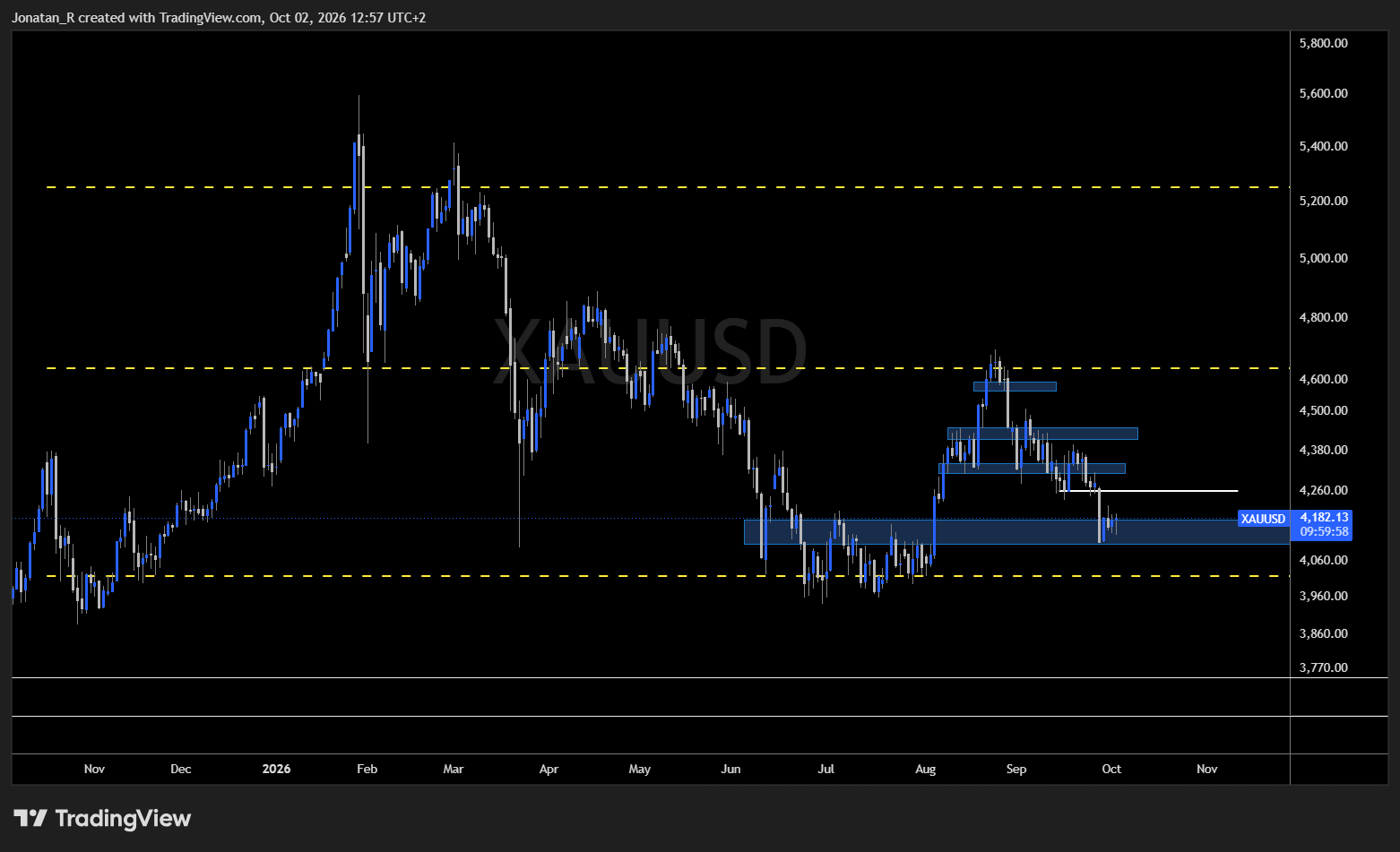
Gold is currently finding support around $4,150 and pressing into resistance at $4,200, trading near $4,180 at the time of writing.
If the report lowers expectations for another Fed hike, it could act as a bullish catalyst. A break above $4,200 could potentially open a move towards $4,250, the next immediate resistance.
A break below current support could potentially take the price towards $4,000, which looks to be the low of the range gold held between June and August. That makes it an important support level. A break below $4,000 could potentially open the way for a much larger move to the downside.
For now, $4,000 is the key support below and $4,250 the key resistance above.
Trading involves risk.
Author



 Risk Disclaimer
The content provided here is for informational purposes only. It is not intended as personal investment advice and does not constitute a solicitation or invitation to engage in any financial transactions, investments, or related activities. Past performance is not a reliable indicator of future results.
The financial products offered by the Company are complex and come with a high risk of losing money rapidly due to leverage. These products may not be suitable for all investors. Before engaging, you should consider whether you understand how these leveraged products work and whether you can afford the high risk of losing your money.
The Company does not accept clients from the Restricted Jurisdictions as indicated in our website/ T&C. Some services or products may not be available in your jurisdiction.
The applicable legal entity and its respective products and services depend on the client’s country of residence and the entity with which the client has established a contractual relationship during registration.